Where the coffee comes from
Our farms
Not one estate but several thousand smallholdings, gathered by cooperative wet mills on the slopes around Mount Kenya. This is who grows the coffee we ship, and how the lot in your contract is assembled.
How we buy
Cooperatives, not plantations
Around 700,000 Kenyan households grow coffee, most of them on 0.3–0.5 ha — 200–400 trees behind the house. There is no plantation behind these lots. There is a cooperative wet mill, and several hundred neighbours who carry cherry to it by hand every afternoon of the harvest.
That structure decides how the coffee has to be bought. We contract at the factory — the Kenyan word for a cooperative wet mill — and we contract before the parchment is milled, not on the auction floor afterwards. The unit we buy is the day lot: one mill, one delivery day, one drying regime. It is the smallest quantity that still tastes like one single thing, and it is what we reserve, ship and put your name on.
We work with 32 factories across 6 regions. During the main crop we are at the mills weekly, cupping day lots as they come off the beds and holding back the ones that match the profiles our roasters buy every season. Because volume is confirmed at the mill before pulping, we can give you a shipping window in advance instead of explaining one after the fact.
Farmers are paid twice for the same cherry: an advance on delivery, then a second payment once the lot has sold. Every lot passport we issue names the cooperative and the wet mill, so that second payment is attached to the coffee you actually bought rather than to a regional average. Ask us for the mill's cherry price for the season and we will send it.
The mills recirculate washing water and return pulp to the members as compost; drying is solar, on raised beds, with no mechanical dryers in the chain. None of that is a certificate — it is simply how a cooperative with a river below it and a hillside above it has to operate.
From the highlands
What the harvest actually looks like
Cherry to container, in the order it happens. Each of these stages is one your lot passes through, and each one is a place where a good lot can quietly be lost.
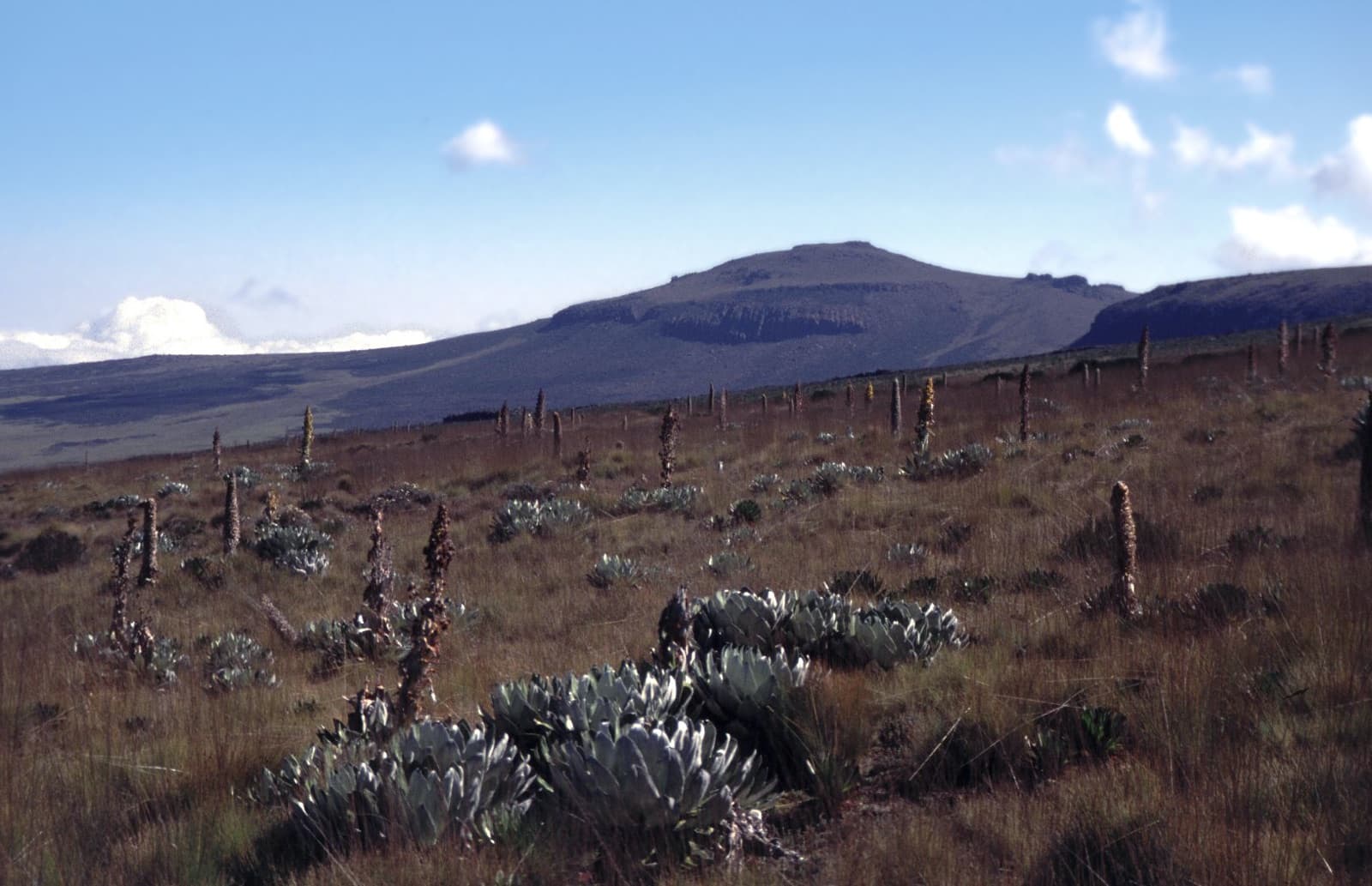
The Mount Kenya massif. Nyeri and Kirinyaga sit on its southern slopes at 1,650–1,900 m: cold nights slow cherry maturation for months, and that slowness is where the blackcurrant acidity Kenya is bought for comes from. 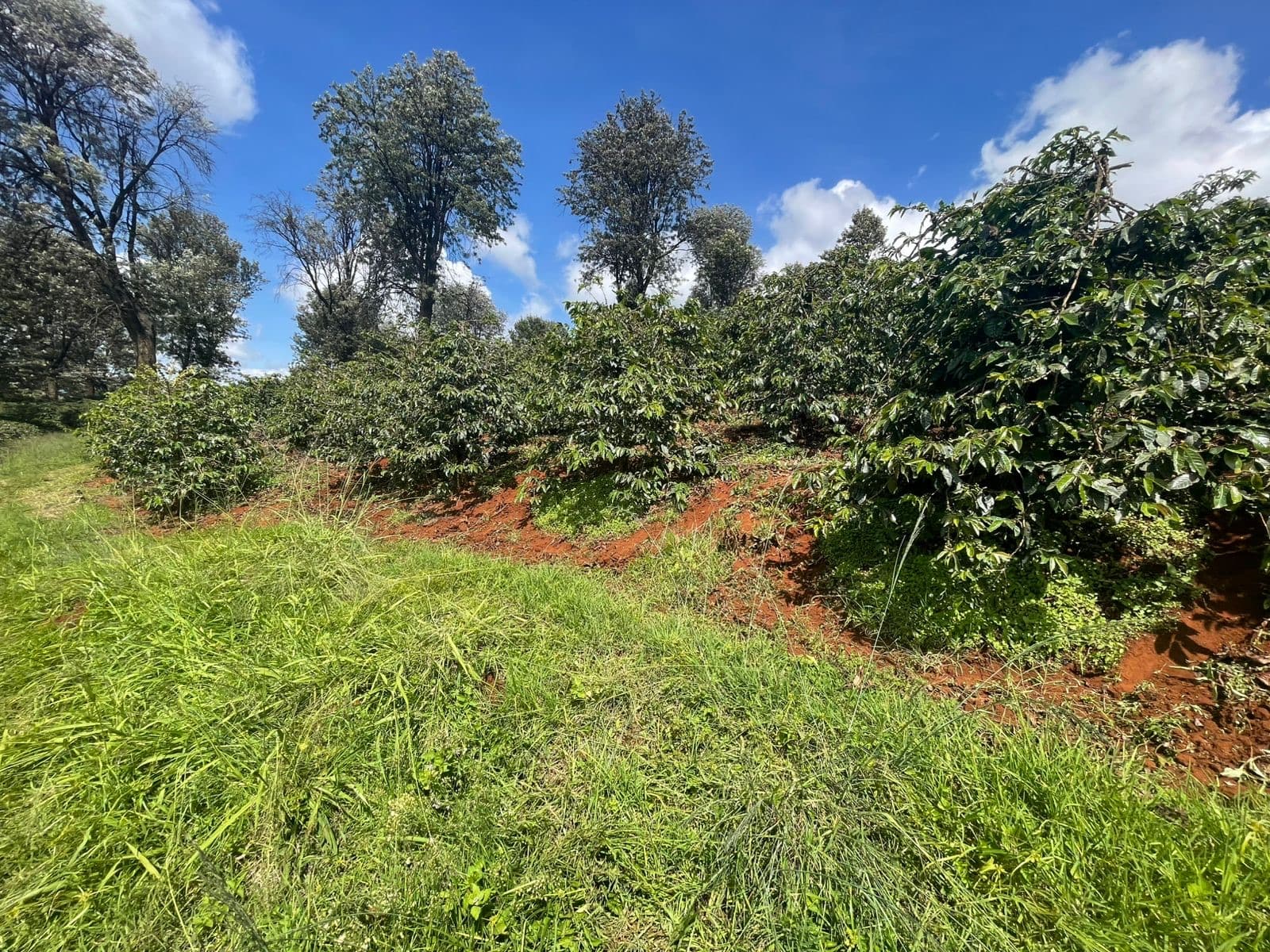
A smallholding in Kiambu — coffee under shade trees on volcanic red soil. Holdings of 0.3–0.5 ha like this one, not estates, make up the bulk of what we ship. 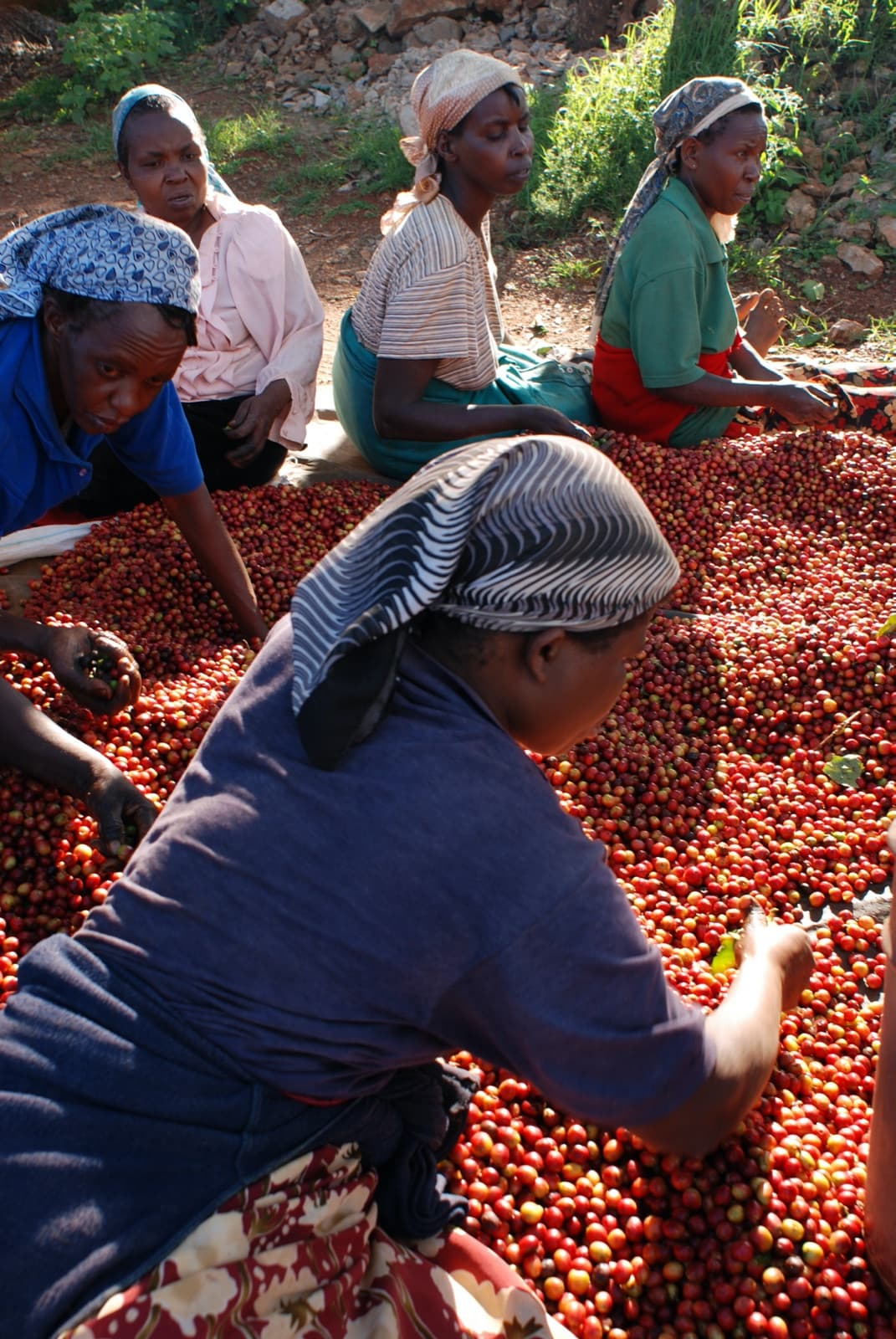
Sorting at the receiving table before the cherry is weighed in. Under-ripes and floaters are pulled out here, in daylight, by the people who picked them — cup cleanliness is decided at this table, long before anyone opens a cupping bowl. 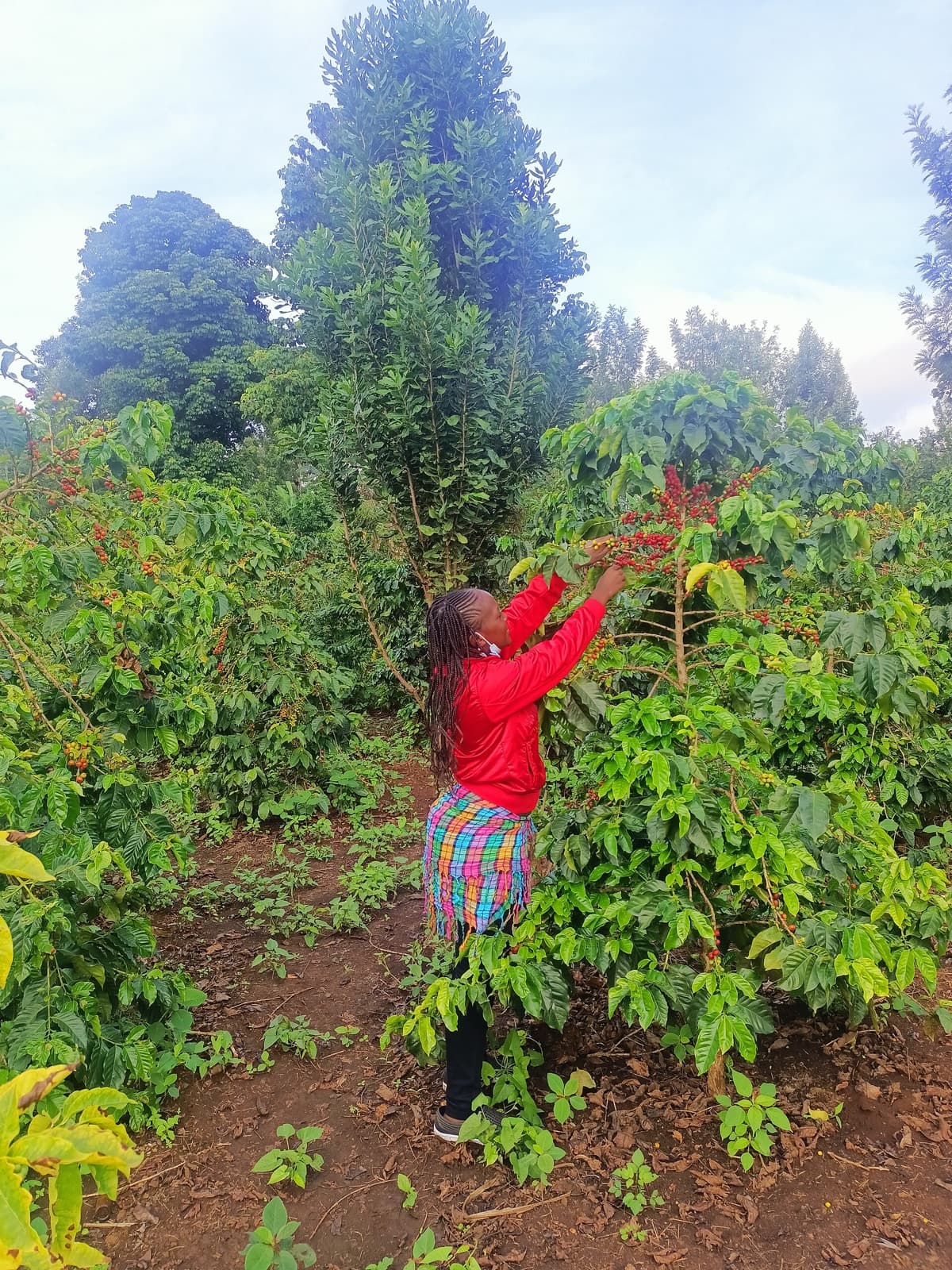
Cooperative members deliver the day's picking on foot in the late afternoon. Cherry is pulped the same evening it is picked; anything held overnight ferments in the sack and would carry that into the cup. 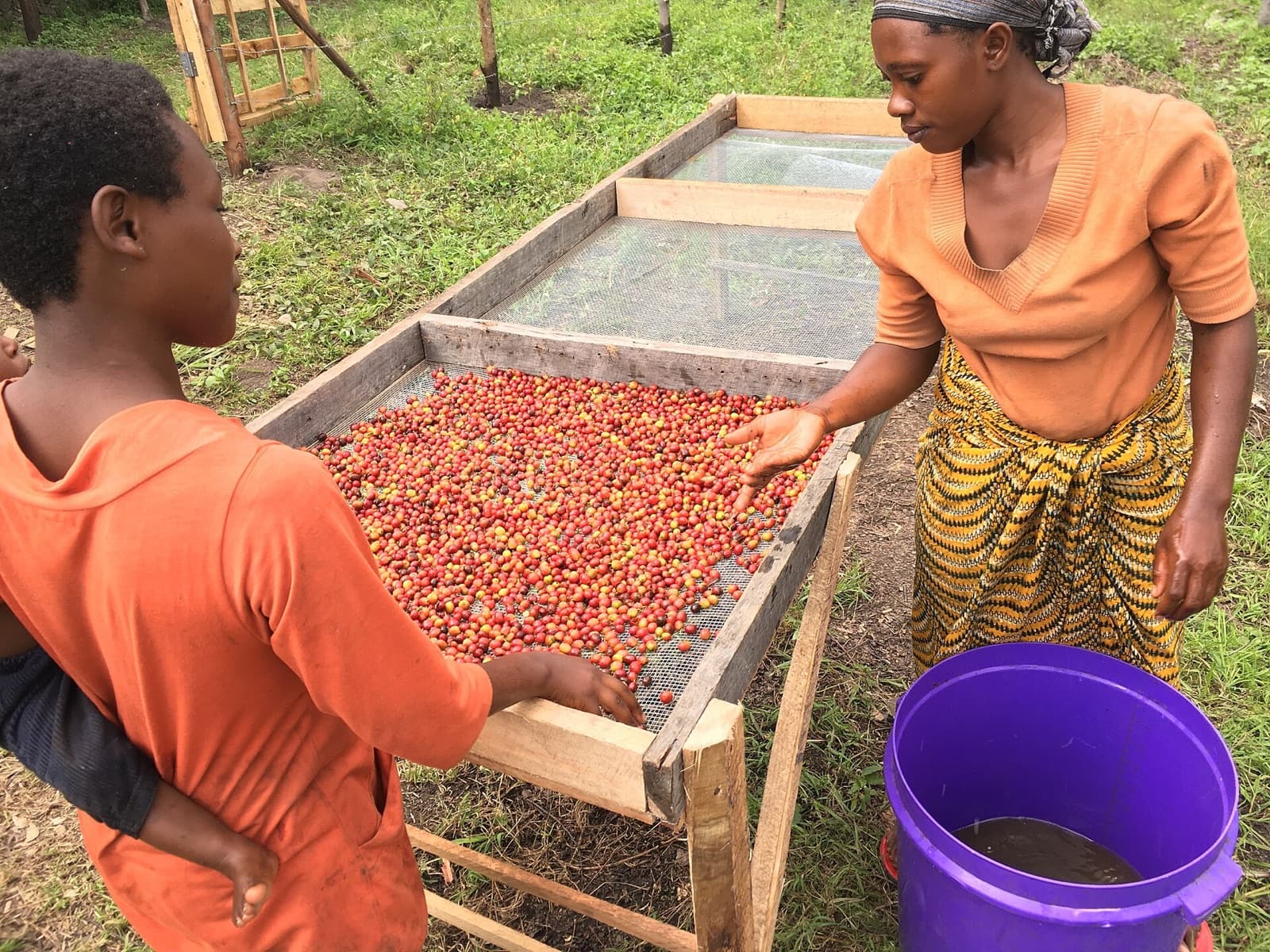
Parchment turned by hand on raised beds — 7–15 days down to 10–12 % moisture, shaded through the midday heat. Slow, even drying is what holds water activity around 0.55 and keeps the lot stable through a month at sea. 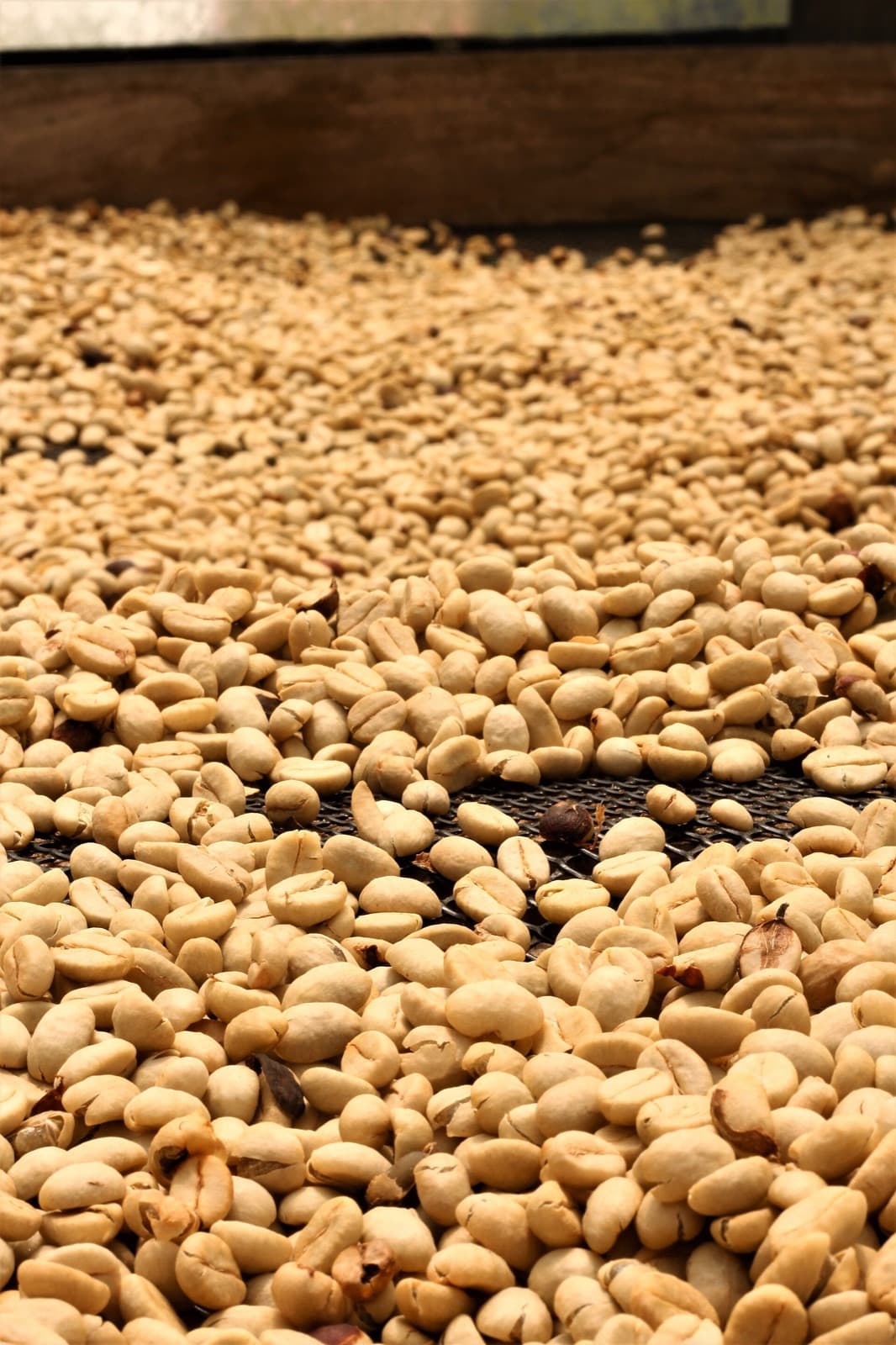
Dry parchment in the mill's conditioning store after a 36-hour ferment and a clean-water wash. Lots rest in parchment and are only hulled to green shortly before shipment, so the coffee ages as little as possible before it reaches your roastery. 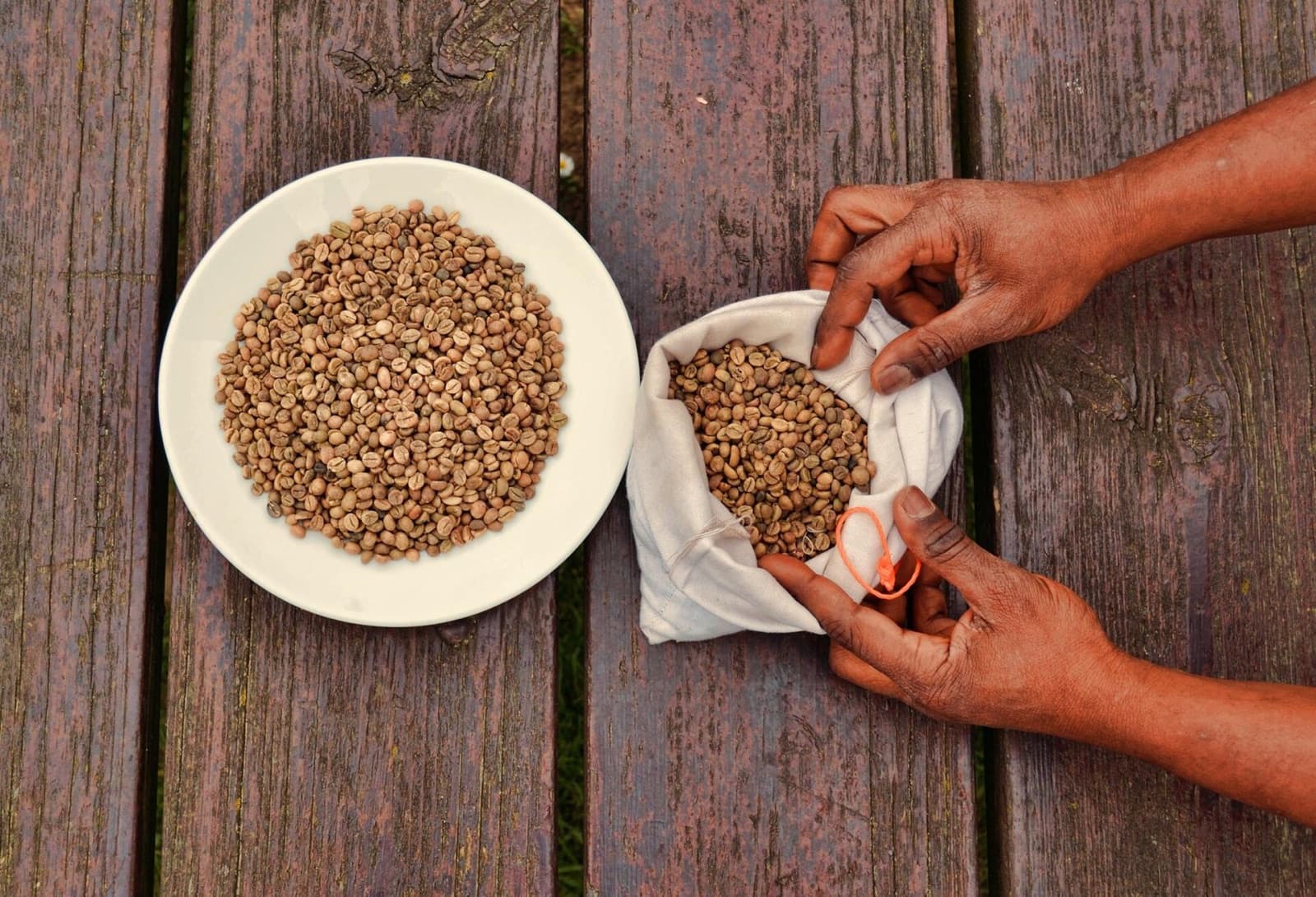
Milled green, graded over screens and by density: AA 17/18, AB 15/16, PB. Grading happens at the dry mill in Nairobi, and every export lot is cupped after grading — a screen size is a size, not a promise about the cup. 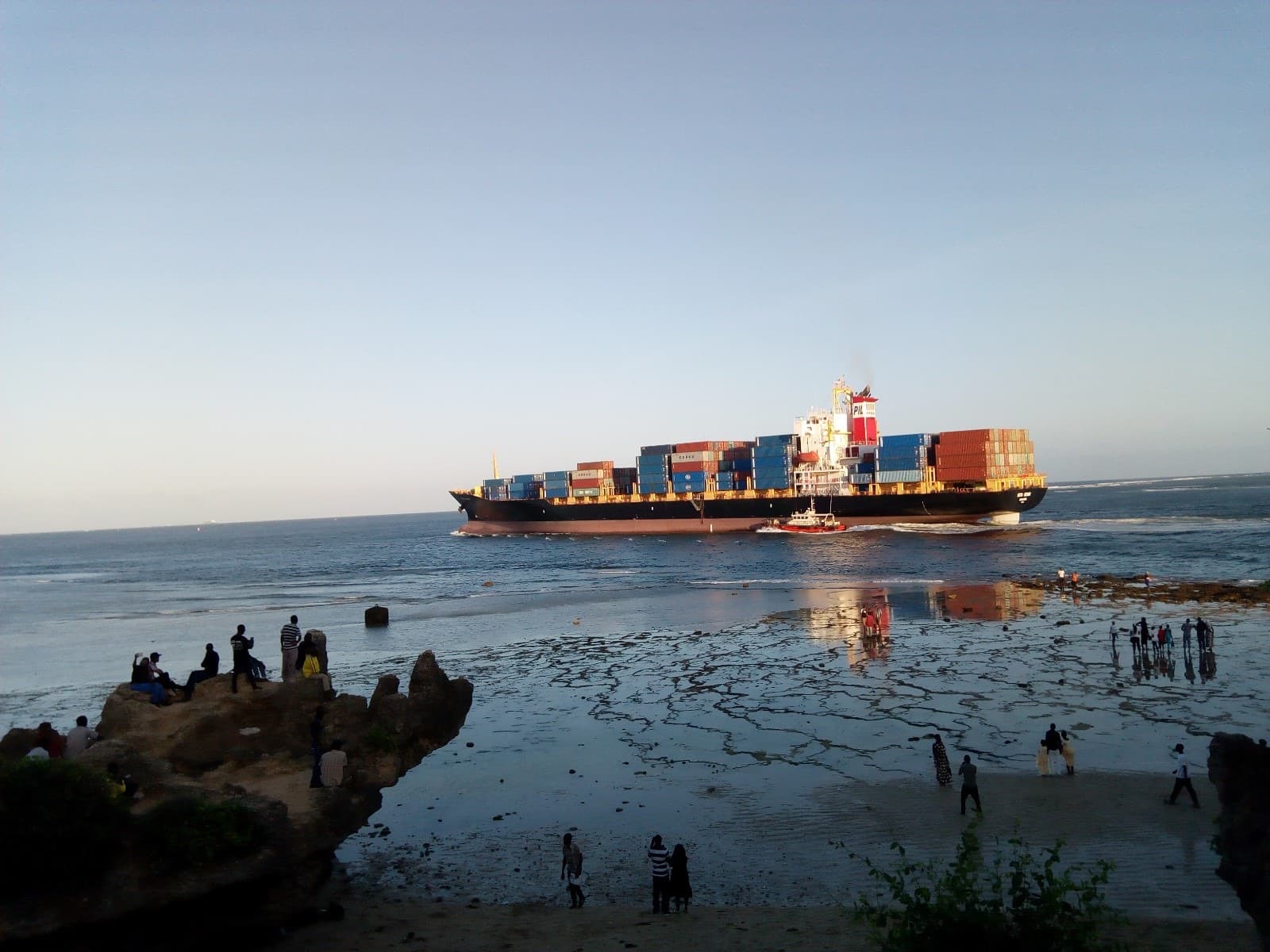
Mombasa. Coffee leaves in GrainPro liners inside jute, FOB or CFR as you prefer — 25–32 days to Novorossiysk, 35–45 to St Petersburg.
Origins
The regions we buy from
Six growing areas, each with its own soil, altitude band and cup. We keep standing relationships in all six so that a poor season in one region does not become your problem.
| Region | Varieties | Altitude | In the cup |
|---|---|---|---|
| Nyeri | SL28 · SL34 | 1,650–1,900 m | The classic Kenyan profile — blackcurrant, tomato, wine-like acidity. Our flagship AA lots come from here and are allocated first. |
| Kirinyaga | SL28 · Batian | 1,600–1,900 m | Cleaner and more floral, grapefruit rather than blackcurrant. Strong, well-run factories and the most dependable AA/AB volume of the six. |
| Murang'a | SL34 · Ruiru 11 | 1,500–1,800 m | Rounder and sweeter with softer acidity. The most consistent AB availability, and our usual recommendation for a blend base. |
| Embu | SL28 · Ruiru 11 | 1,400–1,800 m | Lower and warmer: ripe red fruit, heavier body, less bite. Good value for espresso where the acidity of Nyeri would fight the milk. |
| Kiambu | SL34 · Batian | 1,500–1,750 m | Estates and cooperatives close to Nairobi. Balanced, approachable cup and the shortest run to the dry mill, so turnaround on samples is fastest here. |
| Bungoma · Elgon | SL28 · Ruiru 11 | 1,500–1,900 m | Western Kenya on the Mount Elgon slopes. Milder and tea-like, without the classic central-highland acidity — a genuinely different lot when you want one. |
On request: single-cooperative lots from any of these regions, with the mill named on the contract. The minimum for a named single-mill lot is one full 60 kg bag per grade.
Request a price listPhotography credits
Images are used under Creative Commons licences. Each photographer is credited below with a link to the original file.
- Photo: Kamweti wa Mutu · CC BY-SA 4.0 · Kenyan farmers sorting coffee cherries.jpg
- Photo: Lebu Ayiga · CC BY 4.0 · Coffee plantation near Kawaida Falls, Cianda, Kiambu County 01.jpg
- Photo: John Spooner · CC BY 2.0 · Mount Kenya skyline.jpg
- Photo: PHILIP ASEDRI DRADRIO · CC BY-SA 4.0 · Women drying coffee.jpg
- Photo: Felipe Quijano · CC BY-SA 4.0 · Colombian Parchment Coffee.jpg
- Photo: Isai Symens · CC BY-SA 4.0 · Coffee beans unroasted.jpg
- Photo: Shirleen.Kay · CC BY-SA 4.0 · Small Scale Coffee Farming in Kenya.jpg
- Photo: Ian Kiptoo · CC BY 4.0 · Container ship exiting Mombasa port, Kenya 01.jpg