Sourcing · Traceability
From the Kenyan highlands, lot by lot
The higher the farm, the slower the cherry ripens and the denser the bean — which is where Kenya's structured acidity comes from. Below: the counties we buy in, the season we buy in, and the record that follows each lot to your warehouse.
Growing altitude by county
Metres above sea level · typical ranges
How to read this: each bar is the altitude the farms in that county sit at. The shaded band marks the elevations we select specialty lots from — above it, yields fall away; below it, the cup loses its edge.
Infographic · Seasonality
Harvest and shipping calendar
Kenya harvests twice a year. Fresh crop is committed at the mill before it is milled, so raise your enquiry 6–10 weeks ahead of the shipping window you need.
Harvest, processing and shipping windows
Calendar year · Kenya
In practice: the most interesting main-crop lots are allocated in November and December. Out of season a 30 kg sample still ships from current-crop stock held in our Nairobi warehouse.
Infographic · Supply chain
From farm to cup
Six steps, every one of them documented. That is what traceability means here: give us a lot number and we can pull its whole history — mill records, drying log, cupping sheet.
Step 01
Cherry picking
Selective hand-picking of ripe cherry only, at 1,400–1,900 m, delivered to the wet mill the same day it is picked.
Step 02
Washed processing
Pulping, fermentation in tanks and washing in clean mountain water at the cooperative wet mill, then a soak before the drying tables.
Step 03
Drying on raised beds
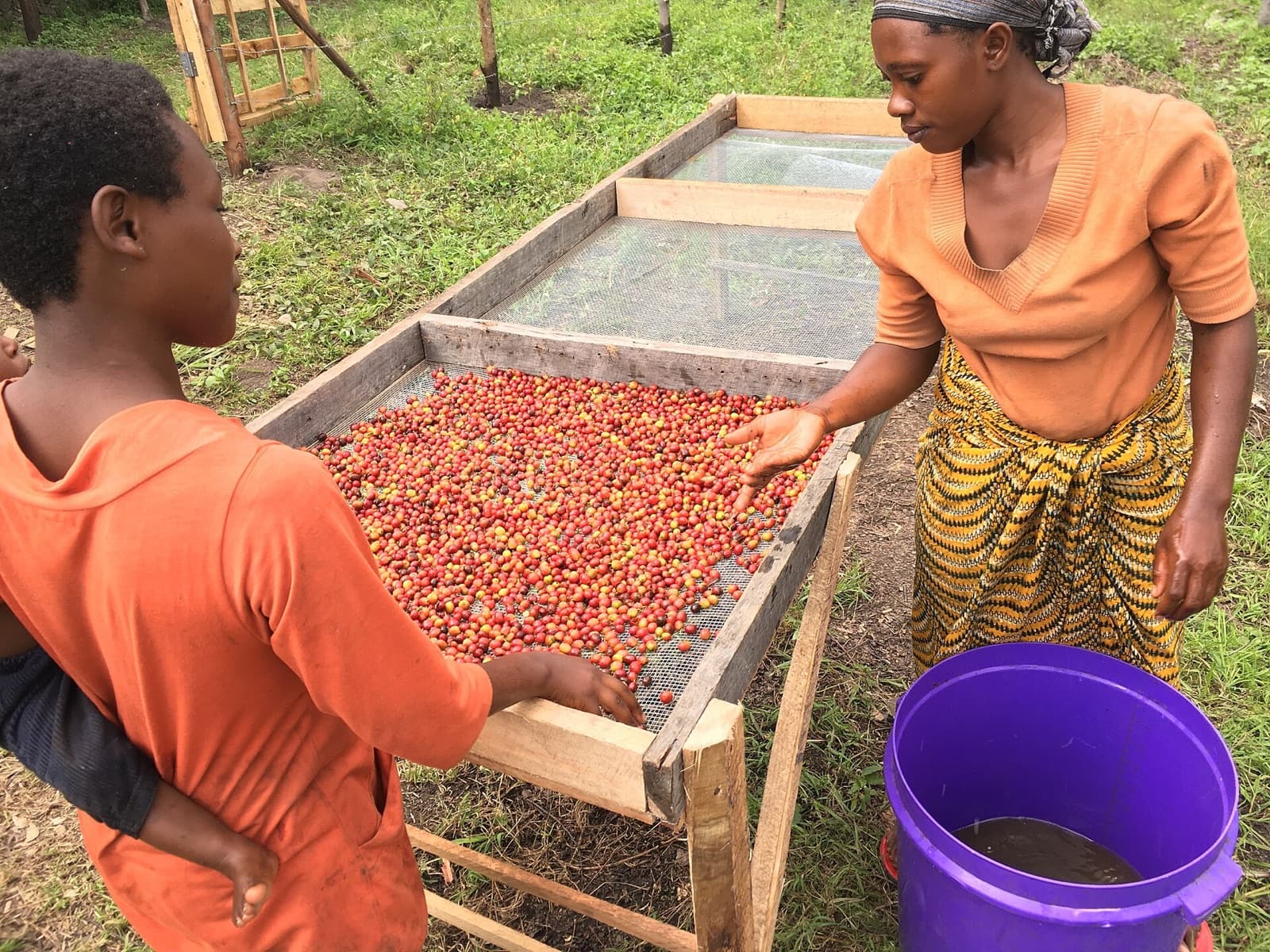
Slow drying on raised beds for 7–15 days down to 10–12 % moisture, turned by hand and covered through the midday heat.
Step 04
Dry milling
Hulling of the parchment, then grading by screen size and density into AA, AB and PB, with density tables and colour sorting.
Step 05
Cupping and QC
A sample is roasted and cupped, moisture, water activity and defect count are recorded. That same sample goes to you before anything is confirmed.
Step 06
Export
Packing in GrainPro liners inside 60 kg jute, full document set issued, container loaded and shipped out of Mombasa.
Our commitment
Every bag
has an address
A lot passport travels with every shipment. Alongside is an example of exactly what arrives with the coffee.
It is generated at the dry mill rather than written up afterwards: cooperative, wet mill, county, altitude, variety, fermentation time, screen, moisture, water activity and the score from the sample you approved.
We keep the file for five years. If your customer or an auditor asks where a specific bag came from, quote the lot number on the ICO marking and the original mill records and cupping sheet come back to you within two business days.
- County
- Nyeri, Central Kenya
- Cooperative
- Gichathaini FCS
- Wet mill
- Wet mill №2
- Altitude
- 1,780 m a.s.l.
- Variety
- SL28 · SL34
- Process
- Washed, 36 h fermentation
- Grade
- AA · screen 17/18
- Harvest
- November 2025
- Moisture / aw
- 10.8 % / 0.55
- SCA score
- 86.25